TED, originally standing for Technology, Entertainment, Design, was founded in 1984 by Richard Saul Wurman and Harry Marks. The inaugural event in Monterey, California, brought together visionaries from disparate fields to share ideas at the intersection of technology, design, and entertainment. Early talks showcased groundbreaking innovations like the compact disc and 3D graphics, but the event struggled financially in its initial years.
TED’s Evolution into a Global Platform
In 1990, TED became an annual conference, gradually expanding its focus beyond tech, entertainment, and design to include science, culture, global challenges, and the arts. Its real global impact began when TED started publishing talks online in 2006, making knowledge freely accessible to millions worldwide. This move transformed TED from a niche conference into a global platform for ideas worth spreading.
- Expansion of Initiatives
TED now encompasses TEDGlobal, TEDWomen, TED‑Ed, and the Audacious Project, offering diverse formats and outreach programs that address education, innovation, and social change. - Democratization of Ideas
By placing talks online, TED broke geographic and socioeconomic barriers, inspiring individuals, organizations, and communities to engage with knowledge in new ways.
The Birth of TEDx
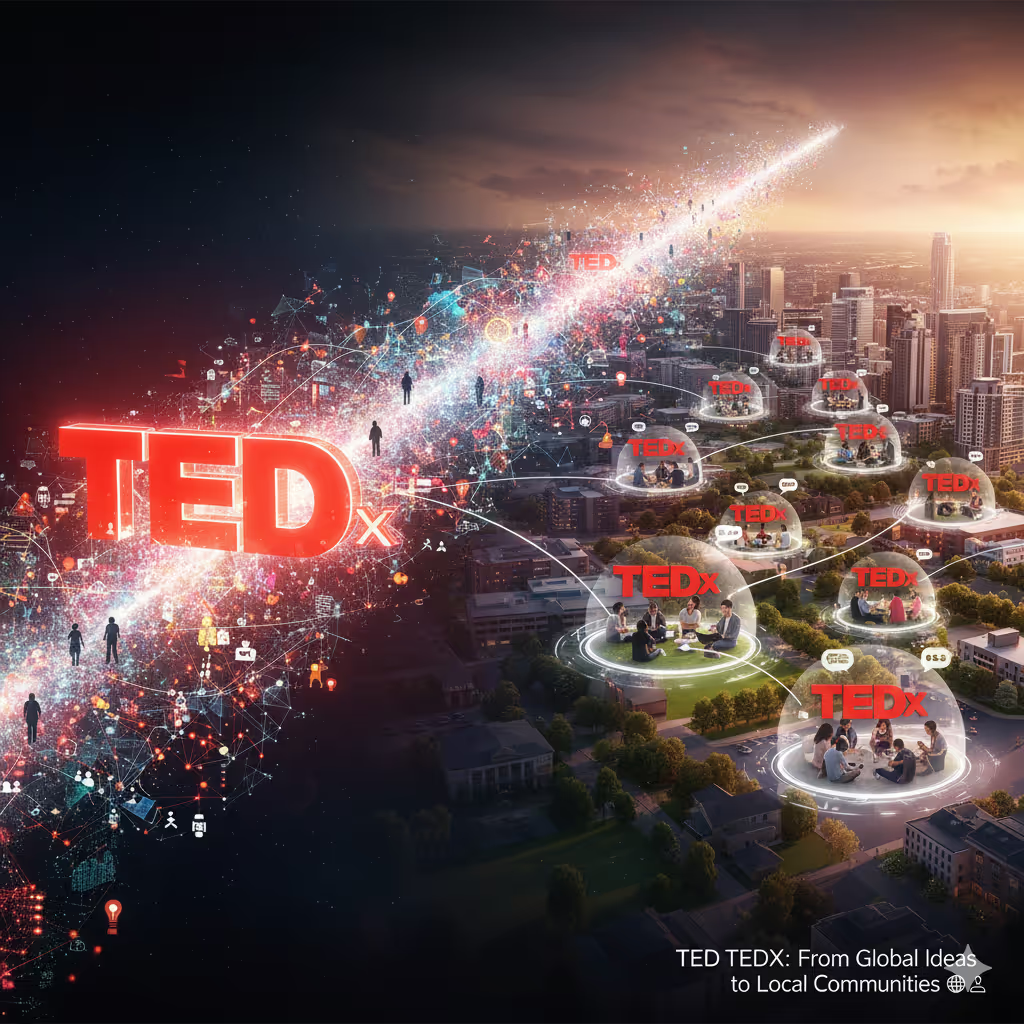
In 2008, TED launched TEDx, a program designed to allow independent organizers to host local, self-organized events under the TED license. TEDx enables communities to share ideas worth spreading in their own cities, universities, and organizations, fostering grassroots innovation and dialogue.
- Local Empowerment, Global Connection
Each TEDx event is independently organized but follows TED guidelines for quality, curation, and format, ensuring the essence of TED is preserved while celebrating local perspectives. - Catalyst for Community Engagement
TEDx events have given voice to emerging leaders, innovators, and storytellers who might not otherwise appear on the global TED stage. Topics range from technology and science to social issues, creativity, and personal growth.
Global Adoption and Influence
TEDx has grown into a worldwide phenomenon, with thousands of events in hundreds of countries, creating a decentralized network of idea-sharing. This model has inspired other conferences and organizations to adopt localized platforms for knowledge dissemination, mirroring TEDx’s approach of combining global standards with local context.
- Education and Youth Engagement
TEDxYouth events engage students and young leaders, encouraging them to explore ideas, develop public speaking skills, and take action in their communities. - Social Impact and Collaboration
TEDx has inspired collaborations, social initiatives, and startups, showing how ideas can translate into real-world impact when local voices are amplified.
Conclusion
From its humble beginnings as a niche conference to a global network of knowledge-sharing platforms, TED has continuously evolved to meet the changing needs of society. TEDx embodies the idea that every community can generate ideas worth spreading, empowering individuals worldwide to share their stories, innovations, and visions for a better future. TED and TEDx together demonstrate that great ideas know no borders, and when communities are empowered, global impact follows.