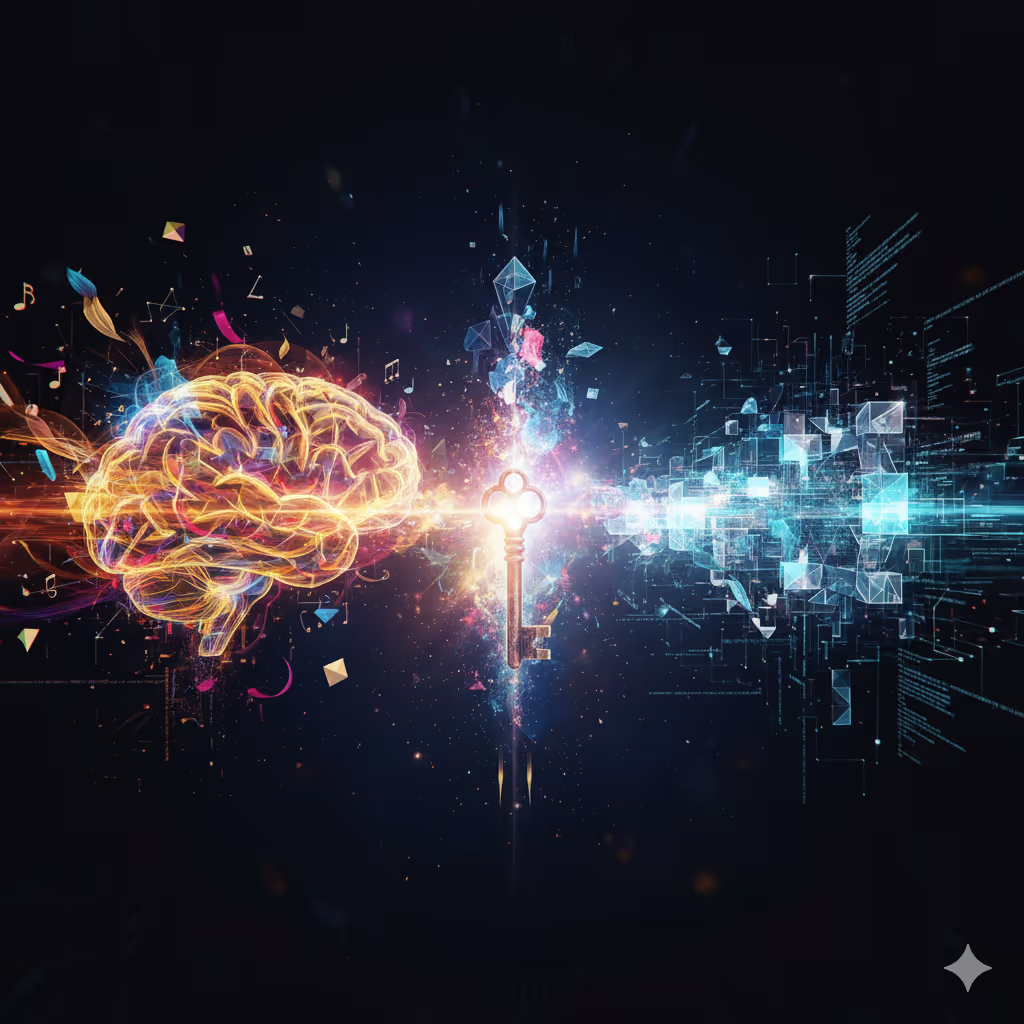
In a world increasingly governed by algorithms, automation and artificial intelligence, the human capacity for creativity is becoming more important than ever. As machines take over routine processes, the ability to imagine, innovate and connect disparate ideas will define success—both for individuals and organizations.
Why Creativity Matters More Than Ever
When machines handle structured, repeatable tasks, the value of what remains—curiosity, intuition, originality—rises. Creative thinkers will thrive because they bring what machines cannot: the spark of novelty, emotional resonance and human meaning.
-
Algorithmic Age and Human Differentiation
In the algorithmic age, many skills are being automated: data‑entry, pattern recognition, even basic decision‑making. What machines struggle with is genuine originality and emotional depth. The future workplaces of 2030 and beyond will reward individuals who can ask the unusual question, combine unexpected fields, or imagine entirely new possibilities. -
Innovation as Lifelong Skill
Creativity is not just for “artists” or “designers”—it’s a mindset, a lifelong skill set. Whether you’re a marketer, engineer, educator or entrepreneur, the ability to creatively adapt, pivot and re‑imagine is critical. As the world changes faster than ever, the capacity to learn how to create becomes more important than learning what to create.
Cultivating Creative Muscles in a Digital Era
To live and work creatively in this age, we need environments, tools and mindsets that nurture experimentation, cross‑discipline thinking, and the freedom to fail.
- Diverse Experience + Cross‑Pollination
Exposure to varied fields—science, art, humanities, coding, play—fosters unexpected connections. Encourage curiosity and exploration outside your domain; ideas often spark at intersections. - Safe Space for Experimentation
Creativity thrives when mistakes are allowed. Organizations and educators should create “sandbox” environments where prototype, fail, iterate and learn are built into the culture. - Digital Tools that Enable, Not Replace
Rather than seeing AI or automation as threats, use them as amplifiers. Tools like generative AI, simulation software or collaborative platforms should support your creative thinking—e.g., generating diverse prompts, exploring alternatives, simulating “what if” scenarios. - Time & Space for Reflection
In a hyper‑connected era, creativity demands moments of quiet, of mental incubation. Allocating downtime, allowing the mind to wander, and exposing yourself to diverse stimuli (nature, art, travel) contribute to richer creative output.
Creativity in Teams and Organizations
Human creativity scales when embedded in teams and organizations. The future of work sees creative collectives, not just solo “creative geniuses”.
- Interdisciplinary Teams
Organizations combining technologists, artists, behavioral scientists, ethnographers and users generate richer insights and innovations. Diverse backgrounds surface unexpected ideas. - Creative Leadership & Culture
Leaders who model curiosity, question assumptions and reward experimentation set the tone. Metrics of success should include novelty, learning from failure, impact, not merely efficiency. - From Idea to Impact
Creativity isn’t only about generating ideas—it’s about executing them. Organizations must streamline pathways from concept to prototype to marketable innovation, balancing creative chaos with disciplined execution.
Measuring and Sharing Creativity
As creativity becomes a key asset, how do we measure, develop and share it?
- Creative Portfolio Over Traditional CV
Instead of solely listing past jobs and tasks, creative workers showcase projects, journeys, experiments, failures and outcomes. This shift reflects value in what you’ve created, not just what you’ve done. - Sharing Creative Process & Open‑Sourcing
Sharing how you thought, what you tried, what didn’t work fosters collective creativity. Open‑source projects, collaborative platforms and community hubs accelerate innovation when people build on each other’s creative work. - Ethical Creativity & Human‑Centered Innovation
In an age of deepfakes, algorithmic bias and automation, creativity must be grounded in ethics and human values. Innovations should enhance human dignity, community, and meaning—not just speed or profit.
Conclusion
In the algorithmic age, creativity is the ultimate human differentiator. When machines excel at structure, consistency and scale, humans must excel at surprise, connection and meaning. By cultivating creative mindsets, building enabling environments and embedding creativity into teams and organizations, we can navigate a future where innovation, adaptability and human‑centred design set the pace. The question is not can machines think—it’s can we imagine what machines cannot. TEDxNCIT invites you to explore, create and lead in this new creative era.