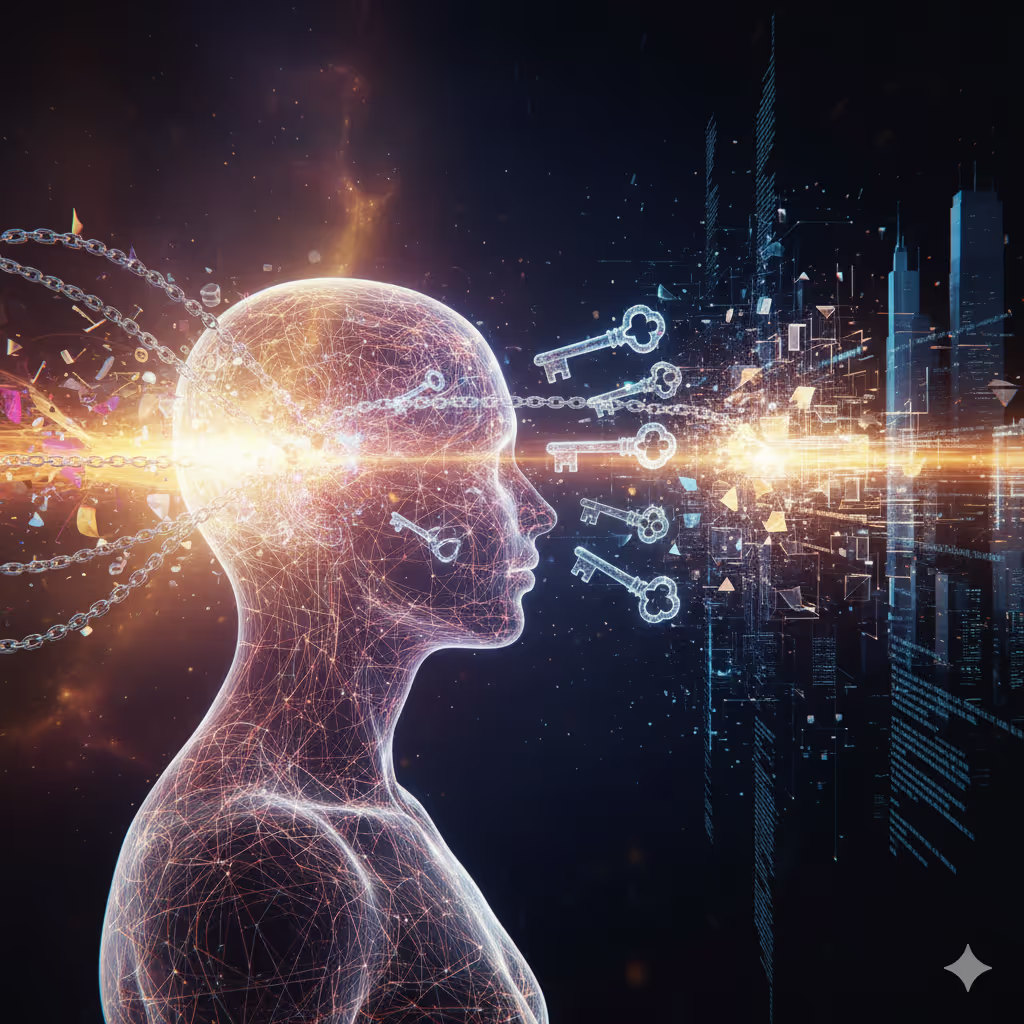
We are entering a transformative moment in human history — one in which not only our actions and decisions but our very cognition is shaped by connected systems, artificial intelligence and neuro‑technologies. In this “Intelligent Age”, as Klaus Schwab describes it, we must address what it means to have cognitive liberty: the right to think, imagine and decide freely in a world of machines. :contentReference[oaicite:1]{index=1}
Neuro‑Tech and the New Frontiers of Mind
Technologies once constrained to science fiction — like brain‑computer‑interfaces (BCIs) and continuous biometric monitoring — are becoming real. Suddenly our mental states, attention spans and even intentions may become visible and manipulable.
-
Brain‑Computer Interfaces (BCIs)
Devices are emerging that can decode neural signals and help individuals control machines with thought. :contentReference[oaicite:2]{index=2} This opens extraordinary possibilities for people with disabilities — but also raises deep concerns about surveillance, autonomy and the boundary between self and machine. -
AI & Mind Data
The data exhaust of our digital lives now includes cognitive data: how we learn, what we pay attention to, how our neural responses map to content and stimuli. And with that comes a shift in power: from systems that serve humans to systems that optimise humans.
Why Cognitive Liberty Matters
In an era where external systems can shape what we think and how we decide, protecting cognitive freedom becomes central to human flourishing.
-
Mental privacy & autonomy
If our cognition becomes visible, it becomes influenceable. Who controls access to our ‘mind‑data’? What happens when attention is monetised or manipulated at the neural level? -
The politics of thought
As neuro‑tech scales, inequality may deepen. Those who can augment cognition, off‑load memory, or enhance focus may create new divides. Schwab’s notion of the Intelligent Age warns of uneven benefits across geographies and populations. :contentReference[oaicite:3]{index=3} -
Meaning, identity & agency
Work, creativity, leisure — all are shaped today by digital feedback loops. With neuro‑tech they will be shaped more deeply. Preserving our sense of agency and meaning in such a context becomes vital.
Cultivating Cognitive Resilience
Just as we practise physical fitness or digital wellness, cognitive resilience is about exercising our minds to stay free and engaged.
-
Mindful tech boundaries
Set clear boundaries around tool usage, attention flow and neural load. Periodically disconnect, practise reflection and reclaim the pace of your own thought. -
Neuro‑literacy and education
Understanding how neuro‑technologies, AI and attention systems work gives you power. Workshops, courses and public policy must emphasise mental autonomy, not only device‑use. -
Ethical frameworks and governance
Societies must craft policies around cognitive data, neuro‑rights and machine‑assisted cognition. Transparency, consent and decentralisation are key pillars.
The Role of Organisations & Institutions
Businesses, schools and governments must adapt to this new frontier.
-
Workplaces of the future
Cognitive augmentation may mean that employees collaborate with AI and neuro‑enhancements. But companies must care for mental health, autonomy and equitable access — not just productivity. -
Education systems reinvented
Teaching students about cognition, neuro‑tech and digital‑mind boundaries becomes as important as traditional knowledge. Encourage curiosity, self‑regulation and attention mastery. -
Global policy & justice
Cognitive liberty is a global concern: cross‑border flows of neuro‑tech, attention marketplaces and cognitive labour must be addressed through international cooperation. The WEF’s emphasis on technology convergence and governance is relevant here. :contentReference[oaicite:4]{index=4}
Conclusion
As we step into this Intelligent Age, the frontier of human freedom shifts inward: from what we can do to what we can think. Protecting cognitive liberty means defending our mental independence, ensuring that technology amplifies, rather than diminishes, our humanity. This is the next great human challenge — and the next great human opportunity.