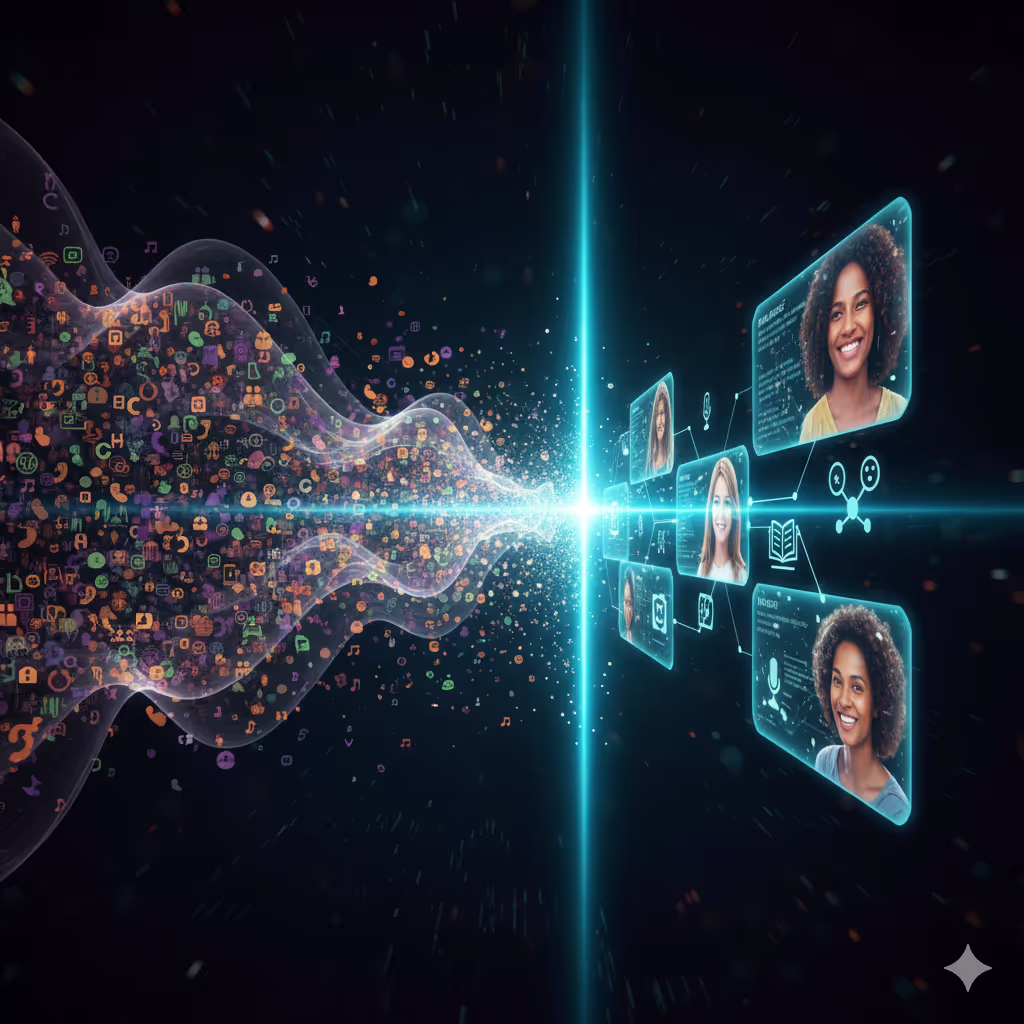
In a world where billions are online, yet many still remain unheard, giving voice to marginalised narratives is more important than ever. Digital platforms can amplify stories once silenced — but they can also distort, commodify or exclude. Ensuring authentic representation and equitable platforms becomes a critical challenge of our time.
Why Marginalised Voices Matter
When certain groups are consistently excluded from mainstream discourse — based on gender, ethnicity, socioeconomic status, geography or other factors — the result is a skewed narrative of society. Inclusion of diverse voices enriches understanding, fosters empathy and strengthens communities.
- Narrative Power & Identity
Stories shape how we see others and ourselves. When marginalised communities control their narratives, they reclaim identity, dignity and agency. - Societal Innovation & Resilience
Global challenges require insights from all corners of society. Innovation is stunted when only dominant voices are heard; resilience is built when diverse experiences inform our solutions.
Digital Platforms: Opportunity & Risk
The digital age offers unprecedented access — but also new barriers. The same technologies that can liberate voices can also silence them or commercialise them unfairly.
- Social Media as a Megaphone
Individuals from remote or under‑represented communities now share insights, stories and art with global audiences. But algorithms may privilege popular voices or content styles, marginalising complexity or nuance. - Data, Visibility and Privacy
Being visible online can be empowering — yet comes with risks. Marginalised voices may face harassment, tokenisation or exploitation when platforms lack safeguards and cultural nuance.
Cultivating Authentic Storytelling
Authentic representation is more than inclusion—it’s agency, context and narrative ownership. Organisations and individuals play a role in how these stories are produced, shared and received.
- Platform Design and Inclusivity
Platforms should be designed to amplify a wide spectrum of voices, not just the loudest. This involves UX, algorithmic fairness, moderation policies and community‑governance structures. - Community‑Led Content Generation
Rather than external agents speaking for marginalised groups, platforms and media should enable those groups to speak for themselves. Training, resources and networks matter. - Ethical Story‑Amplification
When sharing stories from marginalised voices, consider consent, context, compensation and narrative continuity. The goal is partnership, not extraction.
The Ripple Effect of Amplified Voices
When previously unheard voices enter the dialogue, the impact extends far beyond individual stories. Broader culture, policy and innovation are affected.
- Media & Cultural Shift
Representation in media shifts public perception, breaks stereotypes and opens new possibilities for collaboration. - Policy & Social Change
When the lived experiences of marginalised people enter policymaking and design processes, solutions become more inclusive and effective. - Global Digital Justice
Addressing the digital divide ensures not just access, but meaningful participation in the digital story‑space for all communities.
Action Steps for Individuals & Organisations
- Support and subscribe to platforms, creators and networks from marginalised communities.
- When building media, product or event narratives, ask: Who is missing? Whose voice is absent?
- Advocate for data‑transparency, algorithm auditing and inclusive moderation on digital platforms.
- Foster community‑led story labs, digital literacy and peer‑networking for underserved voices.
Conclusion
Amplifying marginalised narratives in the digital age isn’t just a matter of fairness — it’s a matter of enriching our collective future. When all voices are heard, societies become stronger, innovation becomes richer and individuals become empowered. TEDxNCIT invites you to listen, elevate and act — so we can shape a more inclusive digital world together.