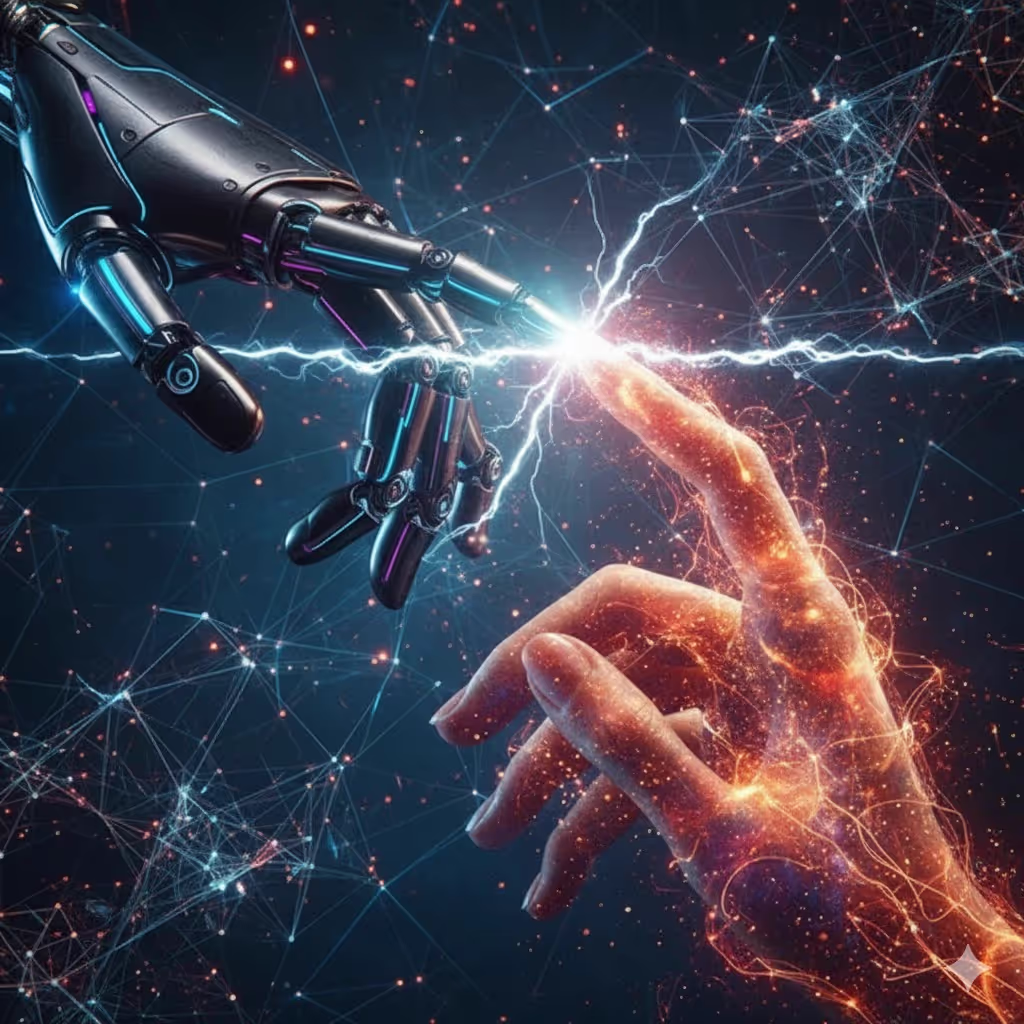
The workplace is undergoing one of the most profound transformations in decades. Artificial intelligence (AI) is no longer just a tool; it is becoming a co-worker, collaborator, and creative partner. As organizations integrate AI into everyday workflows, the future of work demands new skills, mindsets, and structures that enable humans and machines to complement each other effectively.
Redefining Skills for the AI Era
With AI automating routine and repetitive tasks, the value of uniquely human skills has never been higher. Skills like creativity, critical thinking, emotional intelligence, and complex problem-solving are becoming central to professional success.
-
Hybrid Skillsets
Workers now need a combination of domain expertise and digital fluency. For example, marketers must understand AI-driven analytics platforms, while designers may use AI for rapid prototyping without sacrificing aesthetic judgment. -
Continuous Learning
In a world where AI evolves rapidly, continuous upskilling is essential. Microcredentials, modular courses, and AI-driven personalized learning paths help professionals remain relevant and competitive.
Human-AI Collaboration in Practice
AI is augmenting human capabilities rather than replacing them entirely. From generating ideas to analyzing data, the synergy between humans and machines creates new possibilities for innovation.
-
Decision Support Systems
AI tools now provide real-time insights and scenario planning, allowing teams to make data-driven decisions faster. Humans retain judgment and strategic thinking, while AI handles complex computations and predictions. -
Creative Co-Creation
In fields like design, writing, and content creation, AI acts as a brainstorming partner or assistant, suggesting ideas and drafts that humans can refine and adapt. This accelerates workflows and enhances creative output.
Remote Work and AI-Powered Productivity
The rise of remote and hybrid work models has been amplified by AI technologies that support collaboration, communication, and task management.
-
Smart Scheduling & Workflow Automation
AI can optimize schedules, allocate tasks, and predict bottlenecks, allowing teams to focus on high-impact work. Virtual assistants manage routine administrative duties, saving hours of manual effort. -
Enhanced Collaboration Tools
AI-powered transcription, summarization, and language translation tools make global teams more effective, bridging time zones and language barriers seamlessly.
Ethical Considerations and Human-Centric AI
As AI becomes pervasive in the workplace, ethical concerns around privacy, bias, and accountability are critical. Organizations must ensure AI systems operate transparently and inclusively.
-
Responsible AI Policies
Businesses are implementing AI governance frameworks to monitor fairness, transparency, and compliance. Ethical AI use protects employees, clients, and the broader public while fostering trust. -
Workplace Wellbeing
AI should enhance work-life balance, not exacerbate stress. Monitoring tools that respect privacy, while providing actionable insights for workload management, are key to sustainable AI adoption.
Preparing for the Future
The next decade will define how humans and AI collaborate to shape productivity, innovation, and workplace culture. Embracing AI responsibly, nurturing human creativity, and fostering lifelong learning are the pillars of a thriving future of work.
-
Lifelong Collaboration Mindset
Professionals must adopt a mindset of continuous adaptation, learning how to leverage AI to amplify their strengths. Organizations should cultivate cultures where experimentation, curiosity, and resilience are rewarded. -
Global Knowledge Sharing
As AI connects teams and projects worldwide, knowledge sharing becomes a strategic advantage. Learning from AI-assisted collaborations across borders ensures organizations remain agile and innovative.
Conclusion
The future of work is not human versus machine; it is human and machine. By embracing AI as a partner, redefining skills, and cultivating ethical practices, we can unlock unprecedented levels of productivity, creativity, and fulfillment in the workplace. Success in the AI era depends on collaboration, adaptability, and the courage to rethink what work means in a rapidly evolving world.